
The short answer
Sinch is billed per sms message. It has a free tier: Free sandbox + trial. Paid usage is quoted by the vendor rather than listed as a public price.
Plans and prices
| Plan | Price | What it covers |
|---|---|---|
| SMS 10DLC (US, pay-as-you-go) | $0.0078 / message | Per outbound and inbound message; $1.00 setup + $1.00/mo per number; carrier fees apply on top. |
| SMS Toll-Free (US) | $0.0078 / message | Send and receive; $2.00 setup + $2.00/mo per number; carrier fees apply. |
| SMS Short Code (US) | $0.009 / message | Send and receive; $1.00 setup; ~$500 (random) / $1000 (vanity) plus lease fees. |
| MMS | $0.018-$0.02 / message | $0.02 on 10DLC/short code, $0.018 on toll-free, send/receive. |
| Enterprise / volume | Custom (contact sales) | Negotiated per-country rates, dedicated account management, and contractual SLA; typical at ~500k+ messages/month. |
How Sinch bills you
The pricing model is per sms message. Global super-network CPaaS (absorbed MessageMedia, Pathwit) with broad SDKs and a magic-number test sandbox, but a heavier signup. Best suited to: enterprise global messaging at scale.
What to watch for on the bill
- Developer experience and tooling trail Twilio and Telnyx; platform feels enterprise-first
- Pricing is opaque and hard to forecast at scale without a sales conversation; carrier fees stack on top
The pricing page we read
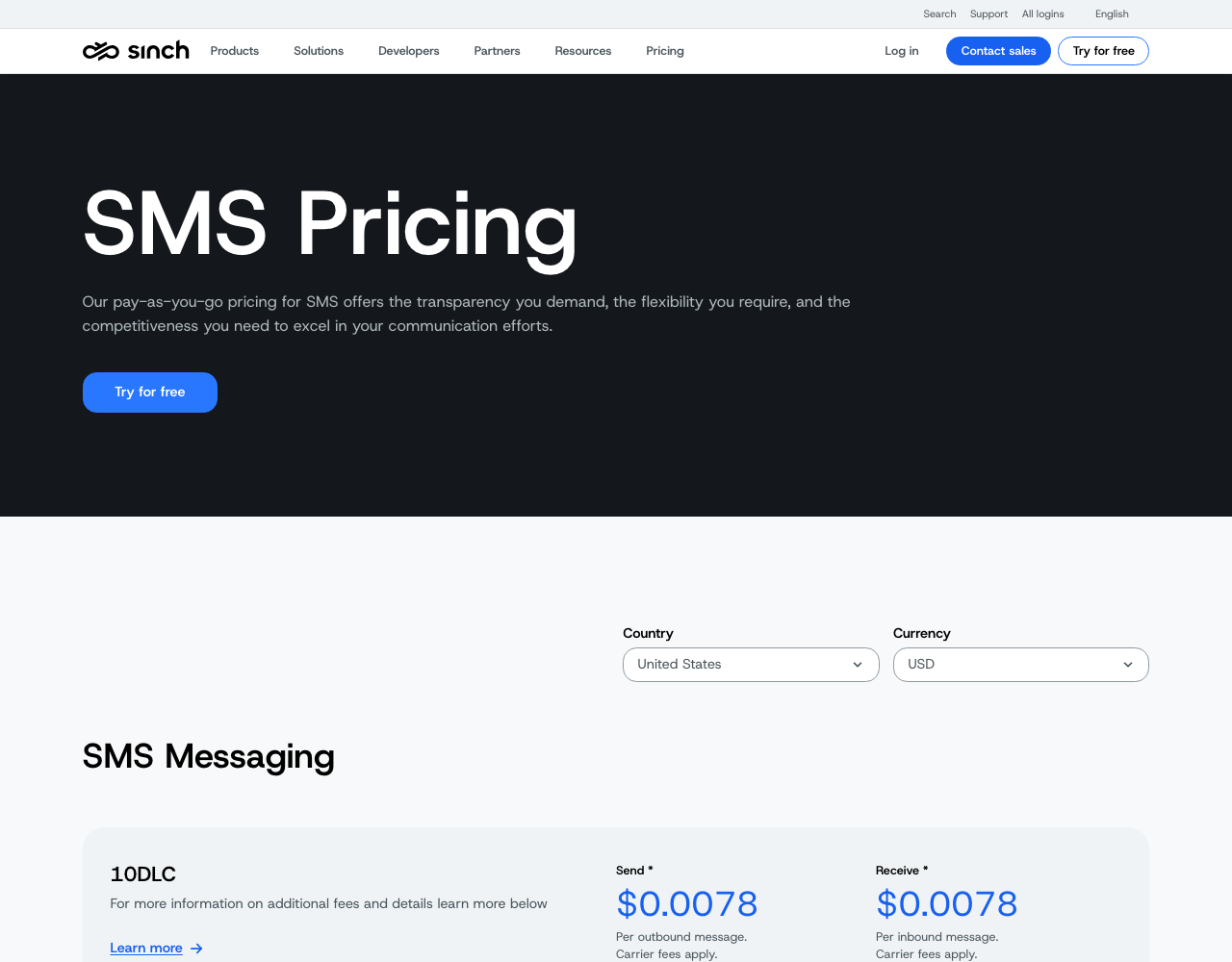
Source: https://sinch.com/pricing/sms/. Prices change, so confirm there before you commit.
Compare Sinch with alternatives
Other sms & messaging apis: Twilio, Vonage, Telnyx, Plivo, AWS End User Messaging (SNS).
Looking at quality rather than price? See the Sinch score on APIbenchmarks. Full entry: Sinch pricing.